SMART Goals
From Vague Intentions to Clear, Actionable Goals

Problem
Employees may set goals that are too broad or difficult to measure, making it hard to identify next steps and evaluate progress.
Solution
A self-paced course introduces the SMART criteria through examples, short practice activities, and feedback. Learners evaluate and revise goals before developing a SMART goal of their own.
Try It
SMART Goals Interactive Course
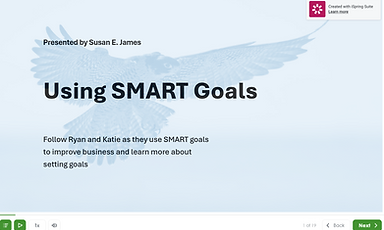
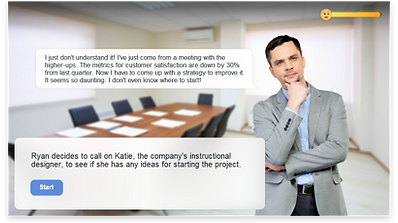
SMART Goals Scenario
Learners follow Ryan as he works through a workplace goal-setting challenge. The scenario gives them context for evaluating a goal, identifying what needs improvement, and applying the SMART criteria to revise it.
Design Documents
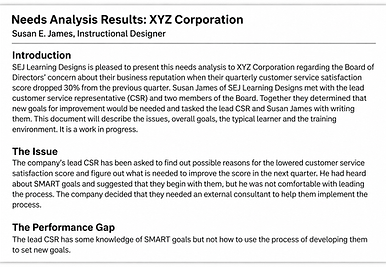
Needs Analysis
Identifies the customer-service performance gap and the goal-setting skills employees need to develop.
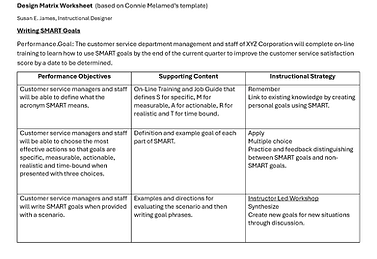
Design Matrix
Aligns the SMART Goals learning objectives with course content, practice activities, and feedback.
View the complete Design Matrix (pdf)
Results & Takeaway
This project demonstrates how I translated a goal-setting performance gap into a self-paced learning experience. I used a needs analysis and instructional planning to connect learning objectives with examples, practice, and feedback. Learners can apply the SMART criteria to evaluate and revise goals, then develop a goal of their own.